
Author: Site Editor Publish Time: 2026-02-02 Origin: Site


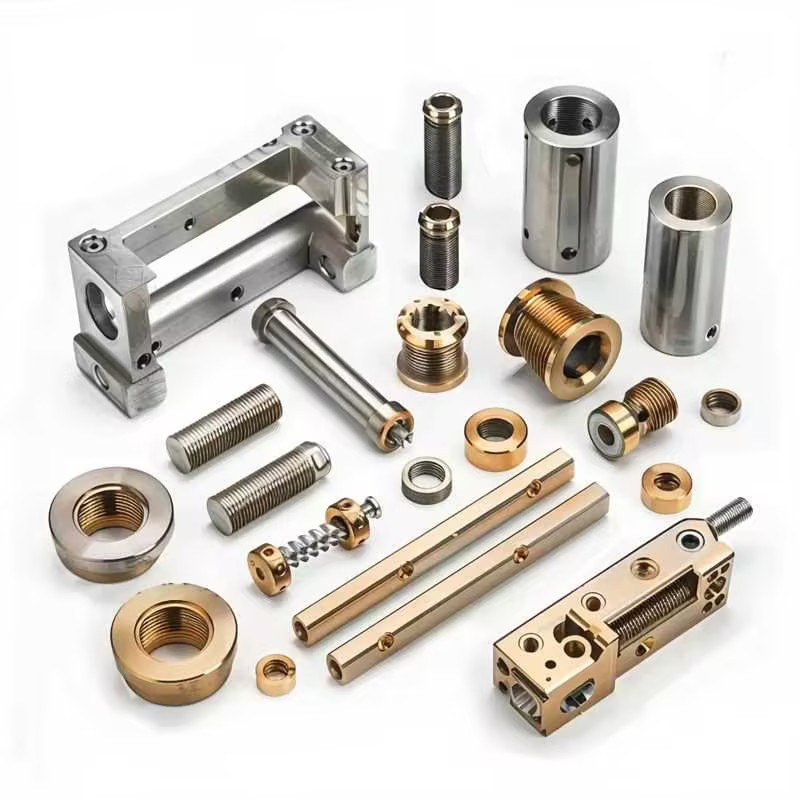
In the field of plastic molding and precision manufacturing, **mold components** are the fundamental units that make up a complete mold system. Simply put, a mold is not a single, integrally formed "block," but rather a system structure precisely assembled from multiple components with varying functions and extremely high precision requirements. These components, through rational design and assembly, collectively complete the entire process of plastic product manufacturing, from melting and molding to cooling and demolding.
In injection molds, the quality, precision, and fit of mold components directly determine the dimensional stability, surface quality, production efficiency, and lifespan of the product. For high-precision injection molded products, even micron-level errors can lead to product shrinkage, burrs, deformation, or even mass rejection. Therefore, mold components are not just "parts" of the mold, but core elements that determine success or failure.
1. Mold Base: The basic structure of the mold system
The Mold Base is the load-bearing platform for the entire mold and the mounting base for all mold components. It needs to possess extremely high structural strength and stability to ensure that it does not deform under high-pressure injection molding conditions. A high-quality mold base effectively guarantees the stability of the mold during long-term mass production and is a prerequisite for reliable operation of the injection mold.
2. Core and Cavity: Key components that determine the product shape
Core: Primarily used for forming the internal structure of plastic products; the internal cavities, holes, and functional structures of the product are largely determined by the Core.
Cavity: Responsible for shaping the external contour and surface details of the product.
In injection molds, the Core and Cavity are usually designed in pairs, and their fit precision directly affects the dimensional accuracy and appearance quality of the product. For multi-cavity molds, the number of cavities also affects production capacity and injection efficiency.
3. Sprue, Runner & Gates: The "traffic network" for plastic flow
Sprue: The first channel through which molten plastic enters the mold.
Runner & Gates: Distribute the plastic evenly to each cavity, similar to a "main road" to "branch roads" structure. A well-designed gating system not only reduces material waste but also significantly improves mold filling balance, preventing problems suchs as short shots, air bubbles, or weld lines.
1. Ejector Pins: Ensuring Smooth Demolding
After the plastic product cools, the ejector pins push the product out of the mold. Improper design of the position, number, and force distribution of the ejector pins can easily cause product whitening, deformation, or damage. Therefore, the ejection system is a crucial part of mold components that cannot be overlooked.
2. Cooling Channels: The Key to Controlling Molding Cycle Time
The cooling system quickly removes heat through internal channels, allowing the product to reach a stable state in the shortest possible time. Efficient cooling channels can significantly shorten the molding cycle, improve the overall production efficiency of injection molds, and reduce dimensional deviations caused by uneven temperature.
3. Venting: Ensuring Molding Quality
During the injection molding process, the air and gases in the mold cavity need to be expelled in a timely manner; otherwise, it can easily cause scorching, short shots, or surface defects. A reasonable venting design can effectively improve the surface quality and molding stability of the product.
In actual production, mold components do not function independently but as a highly collaborative system. The core and cavity determine the shape, the gating system controls the flow, the cooling system affects efficiency, and the venting and ejection structures ensure molding integrity. Insufficient precision in any component will have a cascading effect on the final product.
For this reason, high-end injection molds often have extremely high requirements for the processing precision, material performance, and assembly process of mold components. From prototype verification to mass production, professional CNC precision machining capabilities and a strict quality control system are key to ensuring the long-term stable operation of the mold.
Whether it's a single-cavity mold, a multi-cavity mold, or a complex high-precision injection mold, mold components are the core factors determining product quality and production efficiency. As the injection molding industry continues to demand higher precision, stability, and shorter delivery times, choosing a partner with extensive processing experience, advanced equipment, and a rigorous quality system will be a crucial step for companies to enhance their competitiveness.


