
Author: Site Editor Publish Time: 2026-02-17 Origin: Site


In modern manufacturing, precision mold components play a critical role in determining the performance, durability, and dimensional accuracy of finished products. Industries such as automotive, aerospace, electronics, and medical devices increasingly rely on high-precision molds to produce consistent, defect-free parts at scale. As product designs become more complex, the demand for tight tolerance mold parts continues to rise.
Among various manufacturing methods, CNC machining has emerged as a preferred solution for producing precision mold components due to its exceptional accuracy, flexibility, and repeatability. With nearly two decades of expertise in CNC processing, Dongguan Hongxia Precision Machinery Co., Ltd. provides one-stop support—from prototyping to mass production—helping customers achieve reliable mold performance while reducing manufacturing risks.
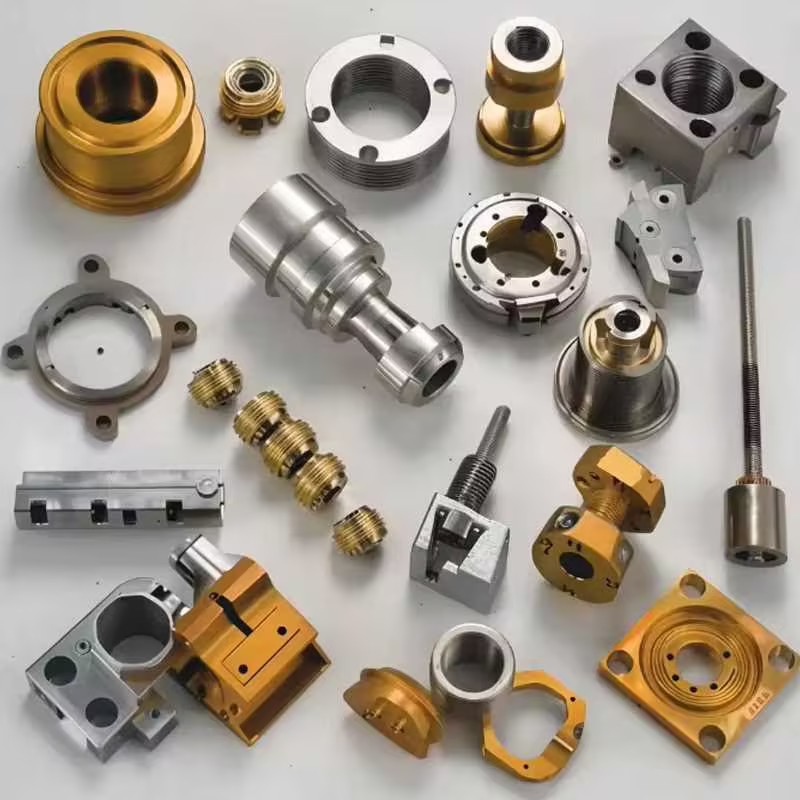
Tolerances define how much variation is allowed in a part’s dimensions. When it comes to molds, even the smallest deviation can lead to assembly issues, surface defects, or inconsistent product quality. Tight tolerance mold parts ensure that every component fits perfectly within the mold structure, enabling smooth operation and longer tool life.
Compared with traditional manufacturing methods, CNC machining offers direct digital control over tool paths, allowing manufacturers to produce parts with micron-level precision. This is especially important for molds with thin walls, sharp geometries, and intricate features—areas where dimensional stability directly impacts the final molded product.
Injection molding remains ideal for large-volume plastic production, but the tooling itself often requires extreme accuracy. CNC machining excels in this area because it removes material precisely according to a digital design file, minimizing variation. Additionally, CNC machining does not require draft angles for part removal, enabling straighter walls and sharper corners that are often necessary in advanced mold designs.
For manufacturers aiming to produce high-performance molds, investing in precision mold components is not optional—it is foundational to achieving consistent results.
Both injection molding and CNC machining are valuable manufacturing technologies, yet their roles differ significantly when tight tolerances are required.
CNC machining is particularly effective for producing mold components with complex geometries. Features such as deep cavities, fine ribs, and intricate contours can be machined with high consistency. Adjustments to machining parameters can also be made in real time, allowing engineers to fine-tune dimensions without rebuilding expensive tooling.
Once an injection mold is manufactured, modifying tolerances becomes far more challenging and costly. CNC machining provides the flexibility needed during the mold development phase, especially when prototypes must be validated quickly.
Repeatability is another major advantage. Computer-driven machining ensures that each part is produced according to identical instructions, making it easier to maintain strict quality standards across production batches. This level of consistency is essential for industries where precision is non-negotiable.
At Hongxia Precision Machinery, advanced 3- to 5-axis machining centers support the production of highly accurate mold components. Combined with access to over 50 certified materials and flexible batch capabilities—from single prototypes to 100,000+ units—the company helps customers scale efficiently without compromising precision.
Achieving tight tolerances is not simply about using advanced machines—it requires deep expertise in materials, tooling, and process optimization.
Different materials respond uniquely during machining. Some plastics may expand with temperature changes or absorb moisture, while metals can deform under stress if cutting parameters are not properly configured. Experienced machinists understand these behaviors and adjust speeds, feed rates, and cooling strategies accordingly to prevent dimensional inaccuracies.
Tool selection is equally important. Certain materials require specialized cutting tools such as carbide or high-speed steel to reduce heat buildup and tool wear. Proper cutting-edge geometry helps minimize friction, preventing melting, chipping, or deformation that could compromise part integrity.
Fixturing is another critical factor. Stable fixturing holds the workpiece securely without over-compressing it, ensuring consistent results throughout the machining process. Optimized tool paths further reduce unnecessary movement and overheating, protecting sensitive materials and preserving surface quality.
Hongxia’s technical team responds quickly to project requirements—often completing drawing analysis and solution customization within 48 hours. By combining engineering expertise with cutting-edge equipment, the company effectively solves complex machining challenges and delivers dependable tight tolerance mold parts.
Quality management is fundamental to maintaining tight tolerances. Every stage of production—from material selection to final inspection—must be carefully controlled to ensure predictable outcomes.
Hongxia Precision Machinery operates a full-process quality control system built around the philosophy of “quality first” and a zero-defect commitment. Precision inspection equipment such as coordinate measuring machines (CMM), projectors, and hardness testers verify that each component meets strict dimensional requirements.
The company follows a triple inspection protocol: first article inspection, in-process inspection, and final inspection. This structured approach ensures that deviations are detected early and corrected before they impact production.
Regular machine calibration and tool maintenance further enhance accuracy, while experienced inspectors validate each part prior to shipment. The result is a product qualification rate approaching 99.9%, reinforcing customer confidence in every delivered component.
Beyond technology, Hongxia emphasizes teamwork and continuous improvement—investing in skills training and encouraging innovation to advance precision manufacturing capabilities.
Selecting the right manufacturing partner is one of the most important decisions when sourcing precision mold components. A knowledgeable team not only understands machining techniques but also anticipates potential challenges before they arise.
With a modern 2,450-square-meter production base, high-end equipment, and a dedicated customer service team, Dongguan Hongxia Precision Machinery is positioned to support global customers with high-precision, high-reliability solutions. Whether developing prototypes or scaling to full production, the company provides responsive technical support and customized strategies that align with each project’s goals.
As industries continue to push the boundaries of accuracy and performance, the importance of tight tolerance mold parts will only grow. By leveraging advanced CNC machining and robust quality systems, manufacturers can ensure their high-precision molds deliver consistent, long-term value.
If you are looking to enhance mold accuracy, reduce production risks, and partner with a team committed to precision manufacturing excellence, working with an experienced CNC machining provider is the first step toward success.


