
Author: Site Editor Publish Time: 2026-01-06 Origin: Site


In manufacturing, custom small-batch machining is becoming increasingly common, especially in prototyping, functional verification, and small-scale production. Compared to mass production, the CNC machining cost for small batches is often more difficult to estimate because the material, design complexity, and machine setup time for each part have a greater impact on the cost. Understanding these factors and accurately predicting costs is crucial for both businesses and individual customers.
This article will systematically analyze how to estimate the cost of custom small-batch machining and provide methods for reducing costs.
CNC (Computer Numerical Control) machining is a manufacturing method that uses computer programs to control machine tools to automatically process parts. It can be used for cutting and machining metals, plastics, and other materials. The machining process typically includes the following steps:
Creating a digital model of the part using CAD (Computer-Aided Design) software.
Generating a CNC program using CAM (Computer-Aided Manufacturing) software.
Importing the program into the CNC machine, which then automatically performs the cutting and machining operations.
When estimating CNC machining costs, the total cost is usually broken down into the following parts:
Total Cost = Material Cost + Set-up Cost + Machining Time × Hourly Rate + Finishing Cost
This method allows for a clear understanding of each factor's contribution to the cost of custom parts, thus enabling more accurate cost prediction.
Material cost is the most intuitive component of CNC machining cost, but it depends not only on the price of the material itself but also on its machinability. Materials with poor machinability increase cutting time, tool wear, and energy consumption, thus increasing costs.
Common materials and their characteristics are as follows:
Aluminum alloys: Moderately priced, easy to machine, short cutting time, low tool wear, suitable for small-batch production.
Steel: Higher cost, medium machining difficulty, requires longer time and more tool consumption.
Stainless steel: High hardness, long machining time, severe tool wear, significantly increased cost.
Titanium alloys and high-performance alloys: High material cost, difficult to machine, complex and time-consuming processing, suitable for high-end custom parts. In custom small-batch manufacturing, choosing the right materials can both meet the functional requirements of the parts and control CNC machining costs.
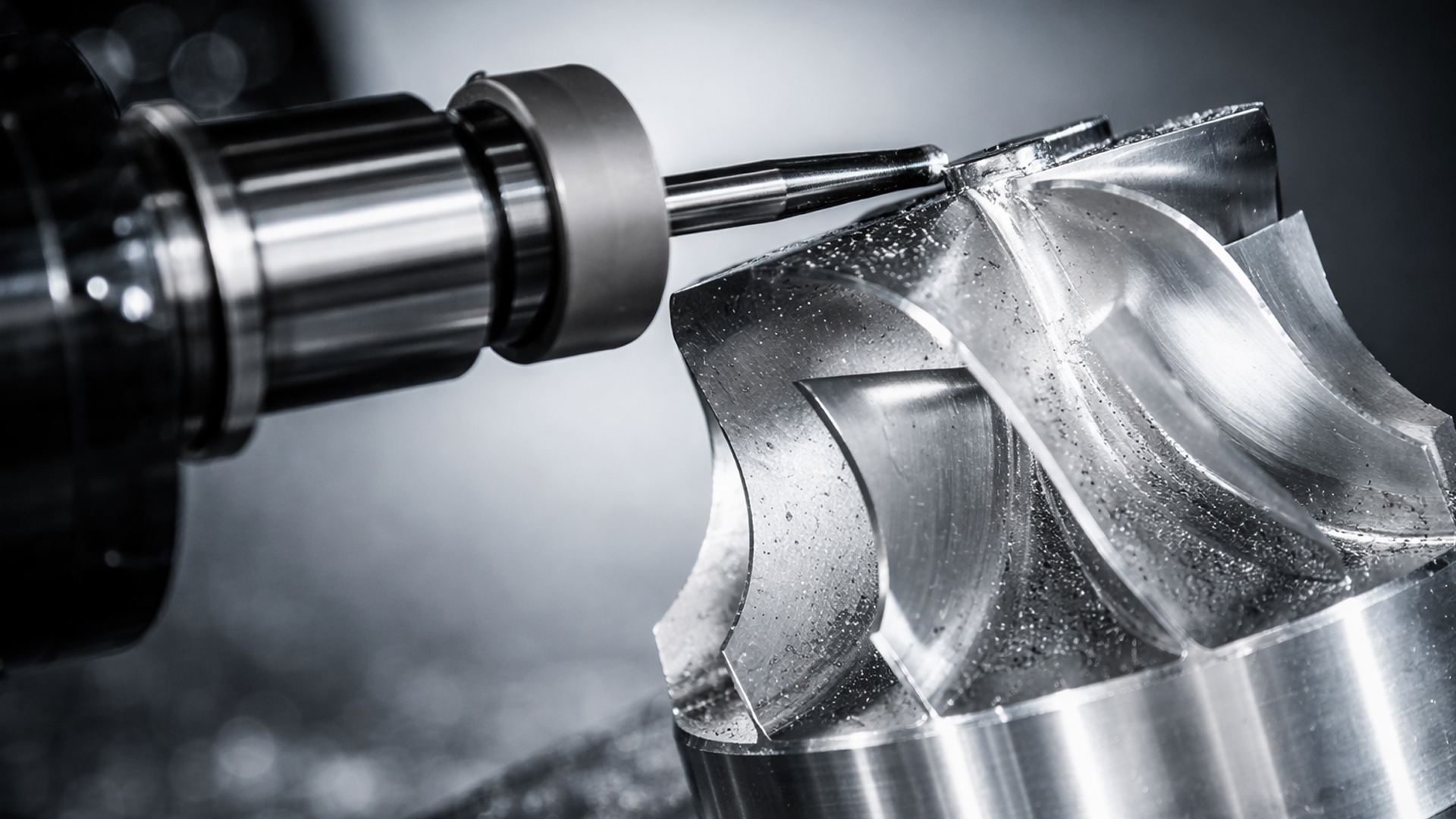
The geometric structure and design complexity of a part are key factors affecting CNC machining costs. Generally, the more complex the design, the longer the processing time, and the more tools and machine setups required, naturally increasing the cost.
Common design factors affecting cost include:
Thin walls and deep cavities: Require special tools and precise control, increasing processing time.
Sharp internal corners: Difficult to machine and prone to tool wear.
High-precision tolerances: Require multiple measurements and adjustments, increasing processing time and material waste.
Raised lettering, engraving, or special surfaces: Increase processing steps and labor costs.
In small-batch production, optimizing the design (such as replacing sharp corners with rounded corners, simplifying complex features) can significantly reduce costs without affecting part functionality.
Another major factor in CNC machining costs is the type of machine and its processing efficiency. Common machines include three-axis CNC machines and five-axis CNC machines:
Three-axis machines: Suitable for simple part processing, lower price, faster processing speed, with an hourly cost of approximately $10–$20.
Five-axis machines: Suitable for complex parts, can complete multi-sided processing in one go, reducing clamping times, but the hourly cost is as high as $20–$40.
Processing time is closely related to machine efficiency: the processing time for the same part on different machines can lead to several times the difference in CNC machining costs. Therefore, in small-batch processing, choosing the appropriate machine type is an important means of controlling costs.
After CNC machining is completed, some parts may require post-processing (finishing) to improve performance or aesthetics, such as:
Surface treatment (anodizing, electroplating, painting)
Polishing or grinding
Heat treatment
These processes increase costs, so they must be considered in advance when estimating custom small-batch manufacturing.
For small-batch manufacturing (custom parts), the following strategies can also be used to reduce CNC machining costs:
Optimize the design: Avoid deep cavities, thin walls, and excessive engraving.
Choose easily machinable materials: such as aluminum alloys or conventional plastics. Increase production batch size: Although it's small-batch production, appropriately increasing the number of units can spread out the machine setup costs.
Standardize hole diameters and threads: Reduce the need for special tools.
Reduce multiple post-processing steps: Only retain necessary surface treatment steps.
Through these methods, small-batch machining of custom parts can ensure quality while keeping CNC machining costs within a reasonable range.
Estimating the cost of custom small-batch machining is a comprehensive process that considers materials, design, machine type, processing time, and post-processing. By systematically analyzing the components of CNC machining costs and combining them with material costs and the characteristics of custom parts, costs can be effectively predicted and controlled. By mastering these principles, manufacturers and customers can achieve high-quality parts production within a limited budget, while optimizing resource utilization and production efficiency.


